AISUS arrived in the Middle East, with a simple proposition: the offshore industry is already generating vast amounts of inspection data but much of the long-term value remains untapped. A year on since ADIPEC last year, the conversations have evolved rapidly, through technical presentations, industry events and client engagement with operators across the region. AISUS has seen growing interest in how artificial intelligence can impact asset integrity management, across budget planning, asset lifespan mapping and supporting regulatory scrutiny in offshore platforms.

“Some people were surprised to see AI applied to a problem like this.” Urmila Gurung, data scientist explained. “It is not where most people would expect to find it – caissons, and inspection data that is already there. But once they saw it working on a real asset, the questions came quickly.”
Moving Beyond Condition Reporting
Inspection campaigns provide valuable snapshots of asset condition, but they often take place years apart. During those intervals, deterioration continues, and operators are left making important decisions with limited visibility of how assets are changing over time.
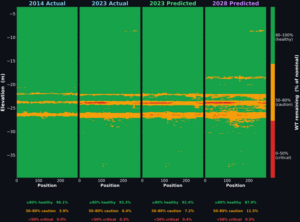
Project cAIsson has been developed to address this challenge, introducing an integrated approach to asset integrity management through the combination of AI, engineering analysis and digital twin technology. Using historical inspection records, engineering knowledge and environmental data, Project cAIsson forecasts future wall thickness and identifies areas most at risk of degradation. Rather than simply reporting condition on the day of inspection, the system helps operators understand where deterioration is occurring, how quickly it is progressing and where intervention may be required.
Recent validation trials delivered particularly encouraging results. In a blind test on a North Sea seawater-lift caisson, the platform predicted a future inspection with 96% accuracy before any of the actual survey results were introduced into the model. Importantly, the system consistently favoured conservative predictions, helping ensure potential problem areas were identified rather than overlooked.
International growth through local presence
The growing level of engagement in the Middle East has also accelerated AISUS regional expansion. The company has strengthened its commitment to the region through the establishment of both entities in UAE and Qatar, alongside the recruitment of personnel based in-country. This local presence allows AISUS to work more closely with operators, respond quickly to project requirements and support long-term asset management initiatives throughout the region.
For AISUS, international growth has never been about simply entering new markets. It has been about building local capability, developing meaningful partnerships and ensuring clients have direct access to both engineering expertise and emerging technologies.

Returning to ADIPEC
ADIPEC remains an important milestone in this journey, returning as part of the EIC UK Pavilion provides an opportunity to reconnect with industry leaders, continue conversations started throughout the year and demonstrate how practical applications of AI are already delivering value to operators today.
While artificial intelligence continues to dominate industry headlines, AISUS’ experience throughout the Middle East suggests the greatest opportunities may not be found in new data sources, but in unlocking deeper insight from information operators already possess.
For companies seeking to improve asset performance, extend infrastructure life and make more confident decisions, the future may already be sitting within the data they have collected for years. AISUS is helping them put it to work.