Overview
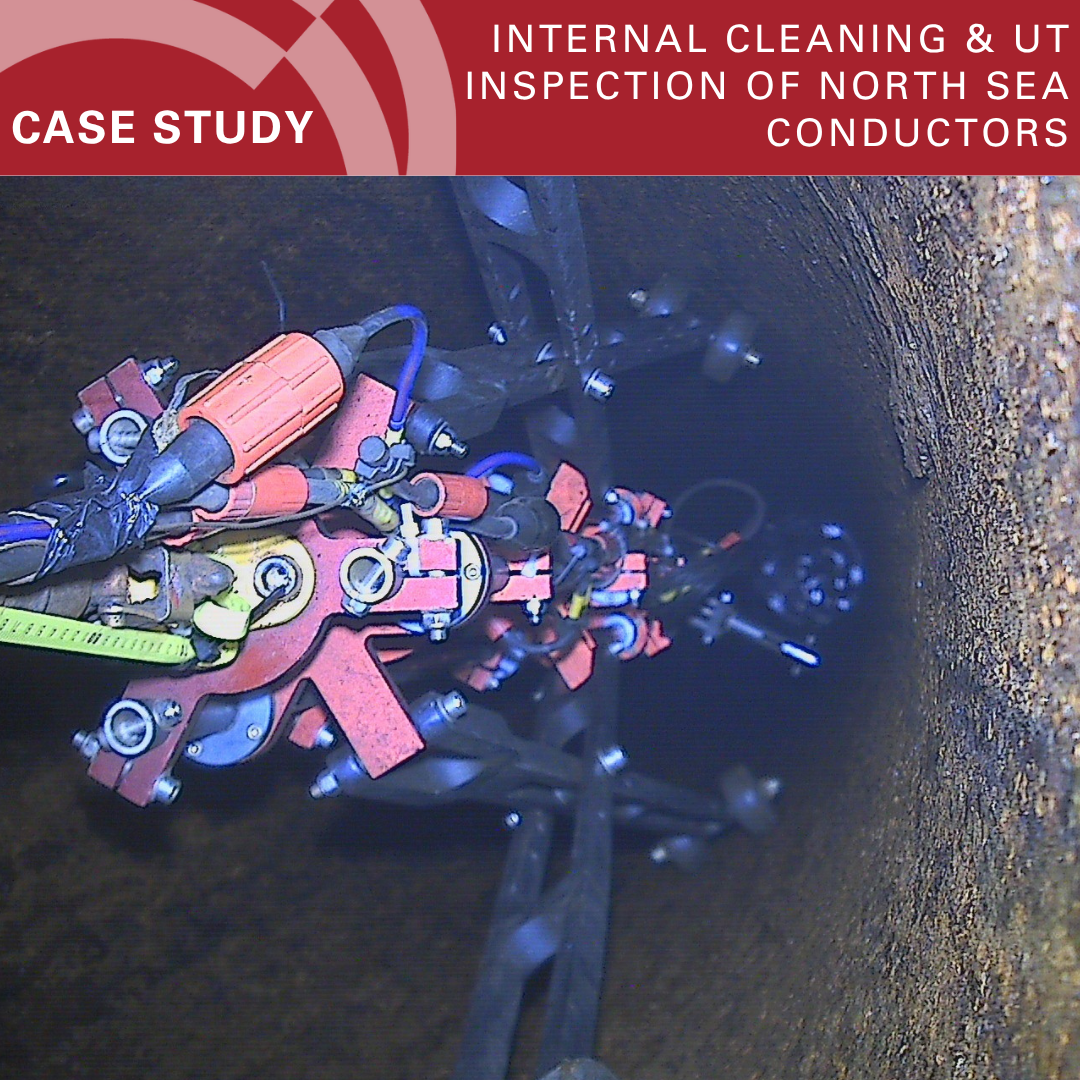
AISUS was engaged on a North Sea offshore platform to carry out internal visual inspection and fluid sample collection through a 3” standpipe within a riser caisson. A single mobilisation covering both inspection for anomalies and fluid sampling delivered added value to the client without the need for additional mobilisations.
Requirement
The client required a combined assessment of the riser caisson involving two scopes of work delivered together:
- A remote internal visual inspection, utilising the inspection ports within the 3” standpipe, to establish the condition of the sidewall and internal pipework, assess cleanliness, and identify any foreign objects, debris or any areas of concern.
- The collection of fluid samples at predetermined depths for laboratory analysis by the platform chemist.

Challenges
The primary consideration was ensuring the camera and fluid sample collector was suitable to carry out the scope and meet the client’s needs. The camera needed to fit into the 3” standpipe, have pan and tilt functionality and be depth rated to at least 100m.
Fluid sample collection had to be performed accurately at three defined depths, 20m, 54m & 104m from the flange face, while sterile handling was maintained throughout to ensure the laboratory results would be representative and uncompromised.
Solutions
AISUS first selected the most appropriate camera system from their extensive fleet and the fluid sample collector. This was mobilised offshore and a visual inspection through the 3” standpipe was completed to assess the condition of the internal pipework, gauge the level of cleanliness, and identify any foreign objects or debris present.
Fluid samples were then collected for laboratory analysis. Sample volumes and depths were pre-determined with the client and taken at three points: the splash zone (20m), the mid-zone (54m), and near the conductivity probe location (104m) from the flange face. Each sample was decanted into a sterile sample bottle and passed to the platform chemist for analysis.
The AISUS report detailed any major anomalies, including images, elevations and dimensions of internal findings. Video footage was reviewed and annotated to support the client’s records and decision-making.
The project was delivered by a single AISUS Field Engineer, demonstrating time and cost efficiency of our remote inspection approach.

Results
By combining remote visual inspection with accurate, sterile fluid sample collection in a single, contamination-controlled operation, AISUS provided the client with a complete picture of the riser caisson’s internal condition and the fluid data required for laboratory analysis, all from one efficient mobilisation.
The visual inspection results showed that the internal pipework was in a good condition with no anomalies or areas of concern observed. The analysed fluid samples concluded that no/very minimal seawater ingress was present, giving the client piece of mind.
Benefits
- Cost effective & time efficient: All tasks completed within a single service.
- Minimal disruption to operations: compact, remote technology completed without downtime and intrusive intervention.
- Confidence in asset integrity: Controlled sampling and detailed visual reporting supported reliable decision-making.