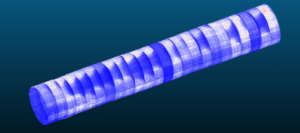
What is Laser Scanning?
Laser scanning NDT (Non-Destructive Testing) is a high-precision, remote inspection method that uses laser beams to capture 3D measurements and create detailed digital models of surfaces and structures. It identifies defects, cracks, and corrosion without damaging the asset, providing highly accurate data for asset integrity reports.
Example: AISUS utilised laser scanning for a large wind farm project, conducting inspections on 46 J-Tubes across 26 jackets, totalling to 414 welds. Our findings confirmed the need for remedial welding activities.

What applications can Laser scanning be used for?
Laser scanning can be utilised to safely inspect both the inside and outside of structures. Equipped with cutting edge technology, our lasers have capabilities to be attached to any of our remote inspection solutions for onshore and offshore inspections.
- Internal inspections: Lasers can scan tight or hard-to-reach areas like pipes or J-Tubes without the need for personnel to enter confined spaces.
- External inspections: It can quickly scan large surfaces like offshore structures, platforms, and welds.
AISUS Lasers are lightweight enabling portability and easy operations. Integrated with a variety of LED lights, blue laser and built-in colour cameras, they deliver high quality optics and reliable results for:
- Caissons
- Risers
- J -tubes
- Process pipework
- Conductors
- Drilling Risers
- Monopiles
- Jacket legs
- Cables
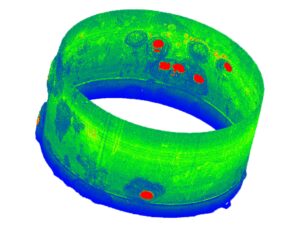
What are the challenges of Laser Inspection?
Although laser scanning is a useful method for many applications, it doesnt come without it’s challenges:
- Surface conditions: Dirt, marine growth, or coatings can affect scan quality
- Environmental factors: Rain, waves, or poor visibility offshore can impact results
- Access limitations: Some areas may still be difficult to position the scanner
- Data size: Large scans create a lot of data that takes time to process
- Specialist skills required: Trained technicians are needed to operate equipment and analyse results
AISUS’ streamlined approach can navigate these challenges through our integrated inspection services. Integrating our lasers with our remote inspection solutions enables data to be captured in even the most challeneging areas, with no human access required. Our small 3 man team deploys our technology from topside utilising their expert skills. High pressure jetting enables a clear surface for accurate scans, collecting data in real time that gets fed to and analysed through our data management platform, Gemini.
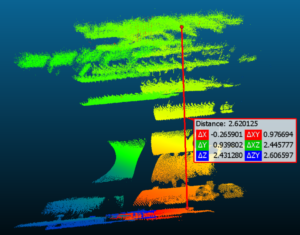
What is remote laser scanning offshore?
Remote laser scanning offshore means inspections are carried out from a distance, without direct human contact with the structure. This is often done using:
- Remotely Operated Vehicles (ROVs)
- Robotic systems
- Fixed or mounted scanning equipment
AISUS provides a cost effective solution that elminates the need for expensive ROV’s or shutdowns to erect scaffolding. Our remote solution reduces risk to personnel whilst collecting high quality data that can be reviewed from a safe location.
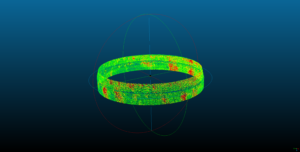
What are the key benefits of Laser Scanning?
Laser scanning offers several major advantages:
- High accuracy: Captures precise measurements and detailed 3D models
- Non-destructive: No damage to the asset during inspection
- Improved safety: Reduces the need for manual access and working at height or underwater
- Time efficient: Faster than traditional inspection methods
- Better decision-making: Provides clear data for maintenance and repair planning
- Digital records: Data gets stored and used for analysing future degradation trends and predictive corrosion.
Our fleet of different laser scanners enables remote inspection on any asset with different features that encompass the problems that come with ageing infrastructure offshore.
Contact Us to find out more → https://www.aisus.co.uk/contact/