
What is Pulsed Eddy Current Testing (PECT)?
Pulsed Eddy current testing is a non-destructive testing method that uses electromagnetic induction to identify flaws in conductive materials, such as corrosion, cracks, and loss of thickness. With abilities to detect these defaults through thick marine growth and in hard-to-access locations, where cleaning or coating removal are almost impossible.
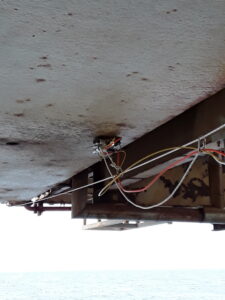
Example: AISUS conducted an inspection on the underdeck of an offshore platform utilising one of our remote inspection systems, equipped with strong magnets to easily navigate the underdeck from topside.
Why is PEC used for External Inspection?
Pulsed Eddy Current Testing can be used for internal and external inspection, however is predominatly used for external inspection on offshore structures due to its capabilities to record wall thickness measurements through thick coatings without needing removal. It requires minimal surface preparation and allows fast screening from the outside, making it a practical and safe method for detecting general wall loss in offshore and onshore assets.
Applications:
- Caissons
- J-Tubes
- Risers
- Conductors
- Jacket Legs
- Monopiles
What are the challenges of PECT inspections?
Although PECT is a highly cost-effective solution for inspecting hard-to-access areas, it does have certain limitations. One key challenge is that PECT cannot reliably distinguish between internal and external defects, as it primarily identifies overall wall loss rather than defect location.
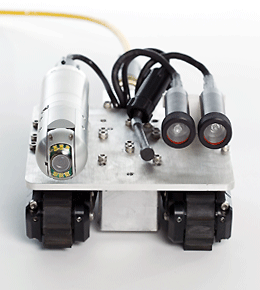
AISUS off the shelf tools are fully customisable with capabilities to be equipped with integrated cameras, allowing operators to visually confim areas of concern. By using PECT as a screening tool to detect potential wall loss, our data gives clients the ability to make informed decisions about future follow up inspections which may include Ultrasonic Testing for more in depth wall loss details at the next possible opportunity.
What is remote Pulsed Eddy Current offshore?
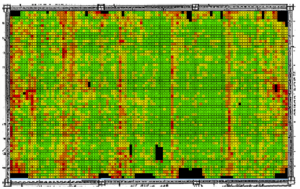
Pulsed Eddy Current is crucial for offshore inspection where costs associated with removing insulation, thick marine growth and paint can be high. It enables the rapid detection of defects covering large areas and scanning through these tough coatings without the time restaints associated with platform shut downs.
With ageing infrastructure many of the hard to reach areas host high amounts of corrosion, this is where AISUS remote inspection solutions can provide critical data needed to make informed future maintence planning decisions without personnel enetering hazardous areas.
What are the key benefits of PEC?
- Enables entry into hard-to-access and hazardous areas.
- Inspections can be completed quickly and remotely, elimating the need for platform shutdowns and saving huge costs for operators.
- High quality data collection through thick coatings without the need for removal.
- Rapid screening capability allows large areas of piping, vessels, and structures to be inspected quickly and efficiently
- Reduces the need for scaffolding removal and confined space entry enhancing overall oparational safety
- Guides follow-up inspections by targeting areas that may require more precise methods like ultrasonic testing (UT)